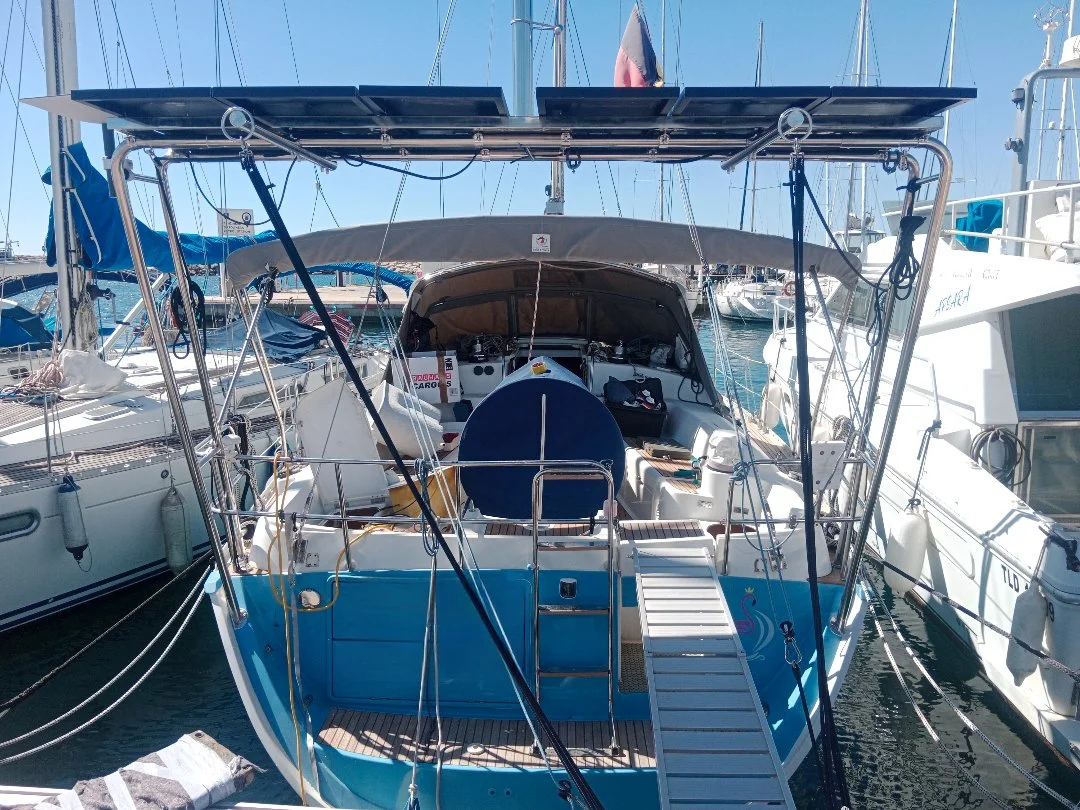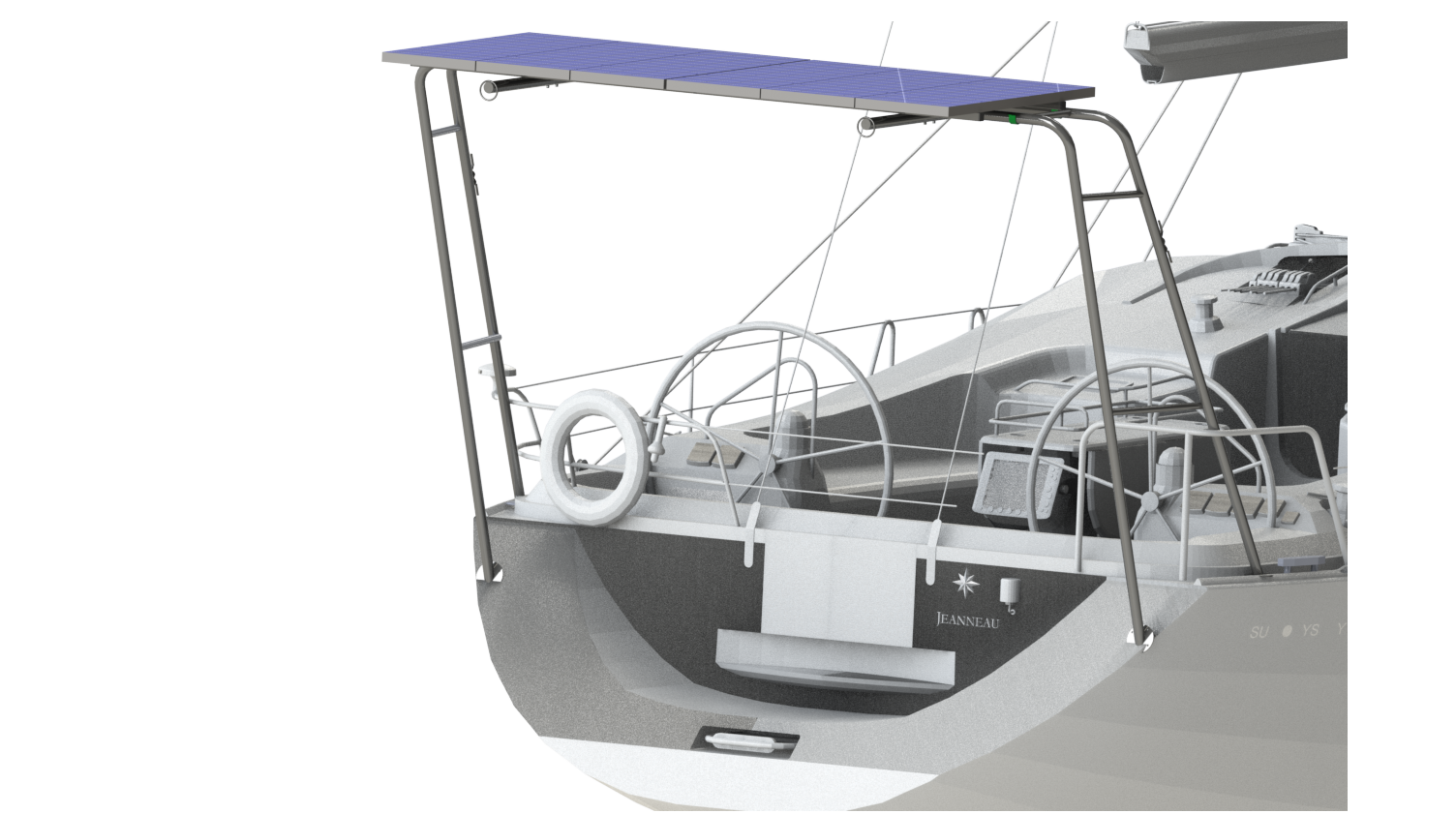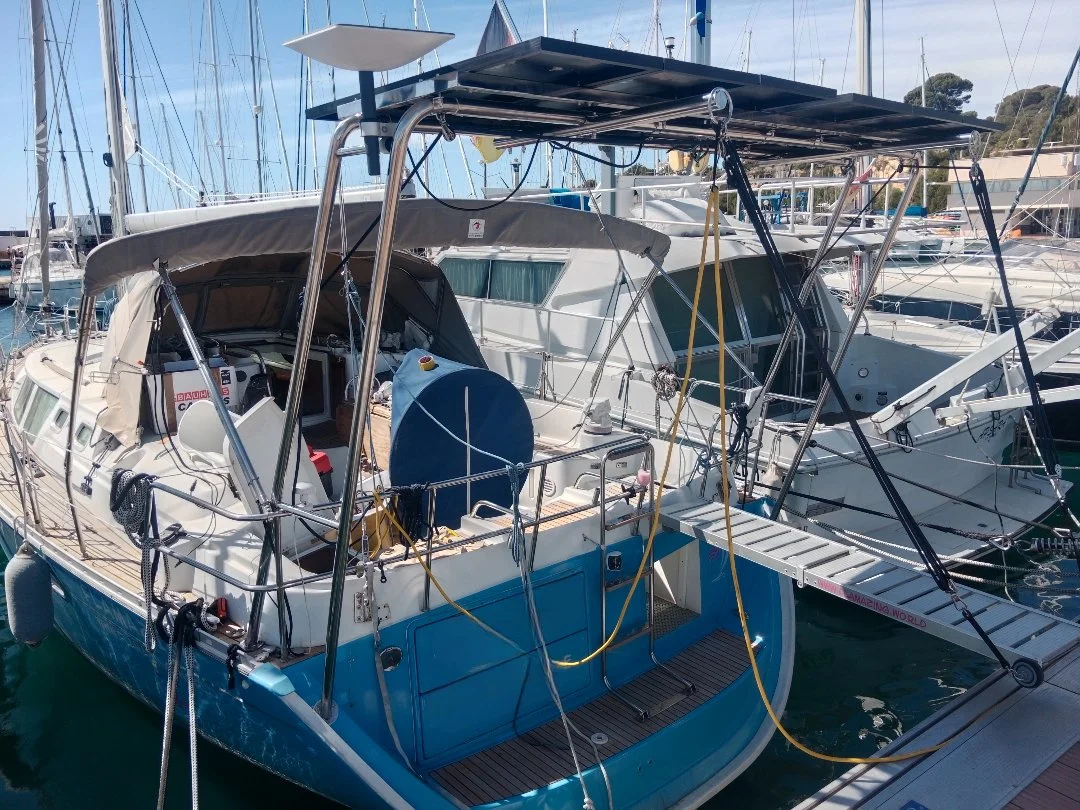
The WeldArch is a solar arch made entirely from AISI-316 stainless steel, suitable for sailing boats with a transom beam of up to 4.5 metres (please enquire if the measurement is greater).
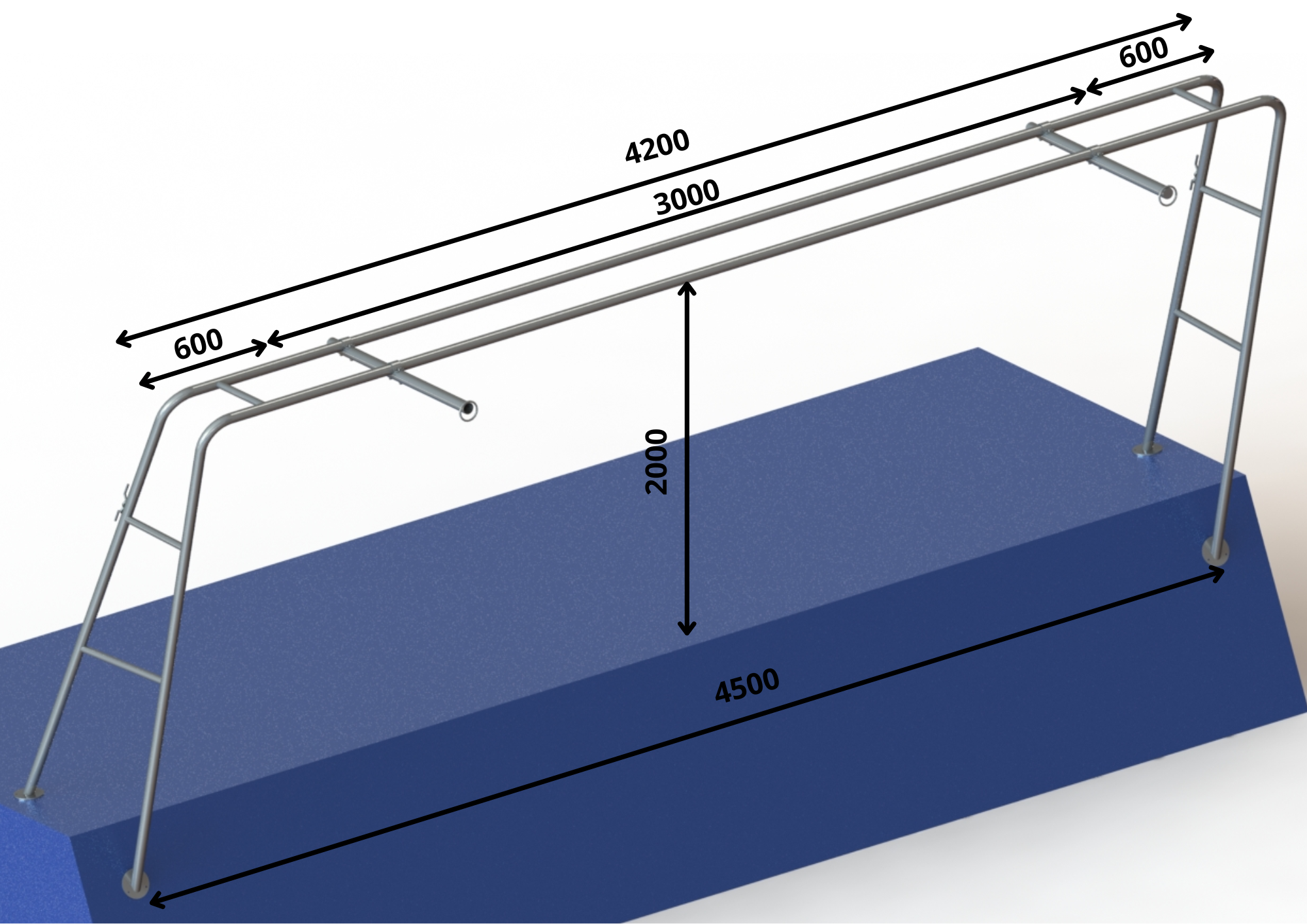
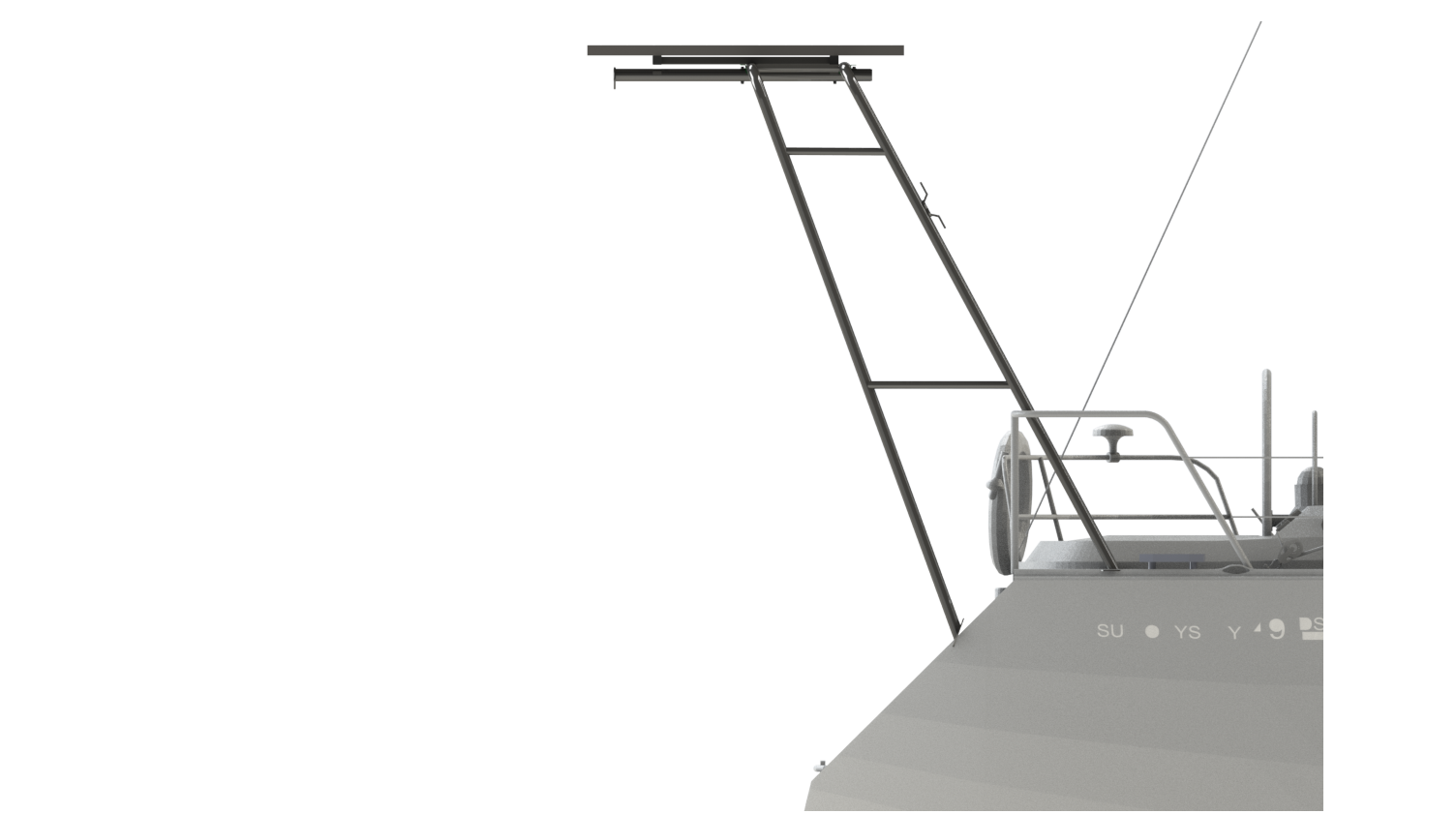
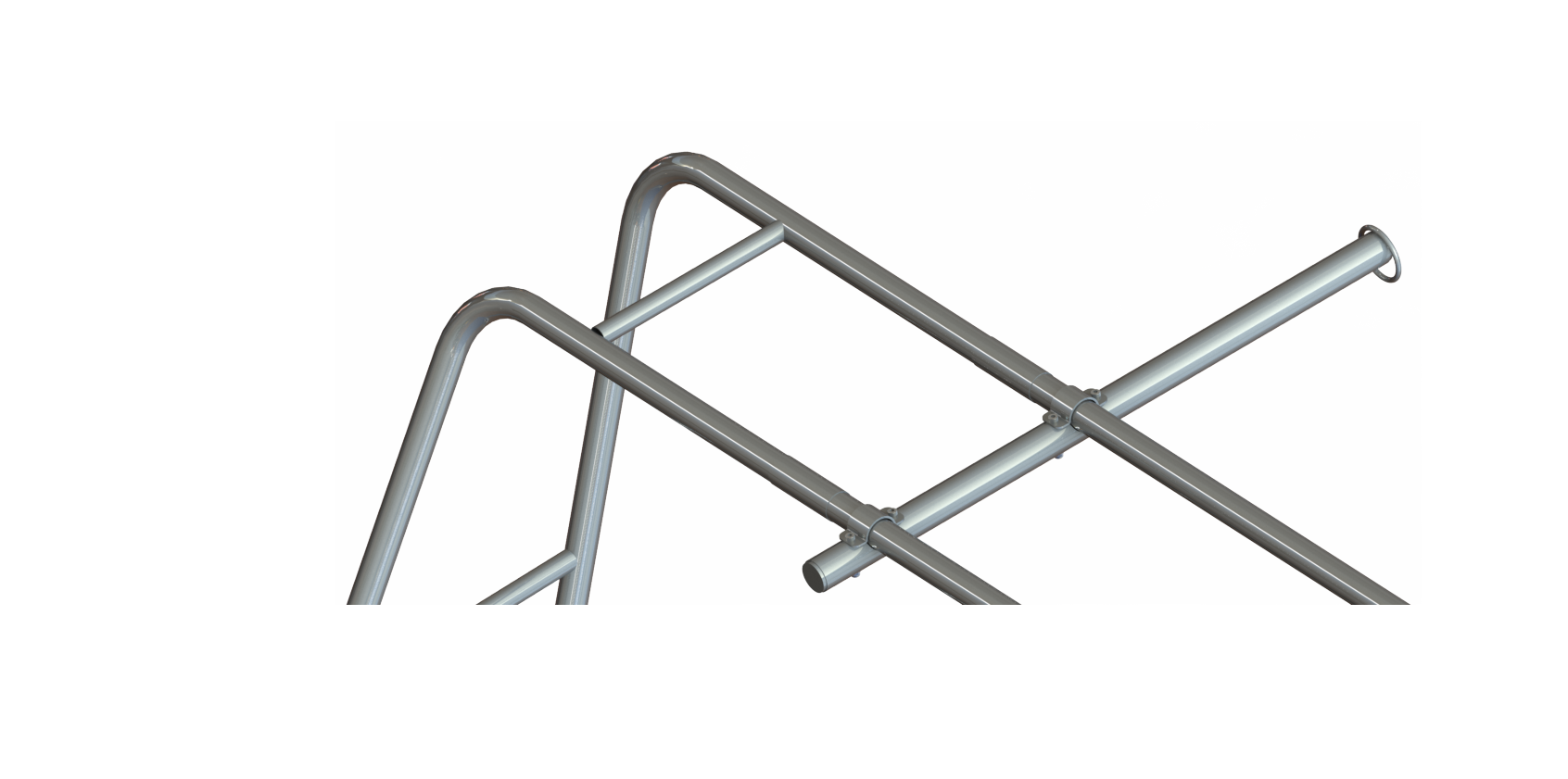
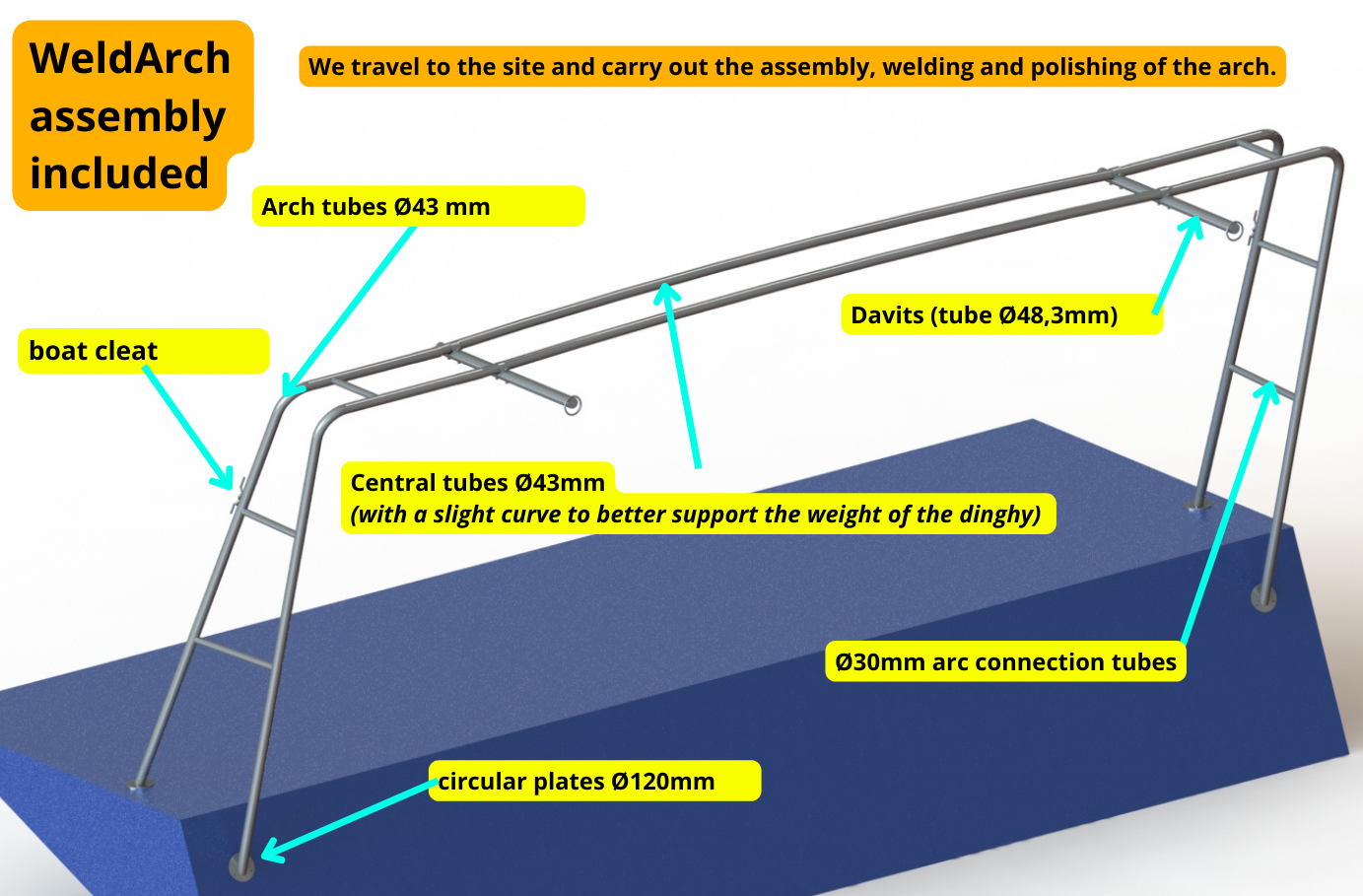
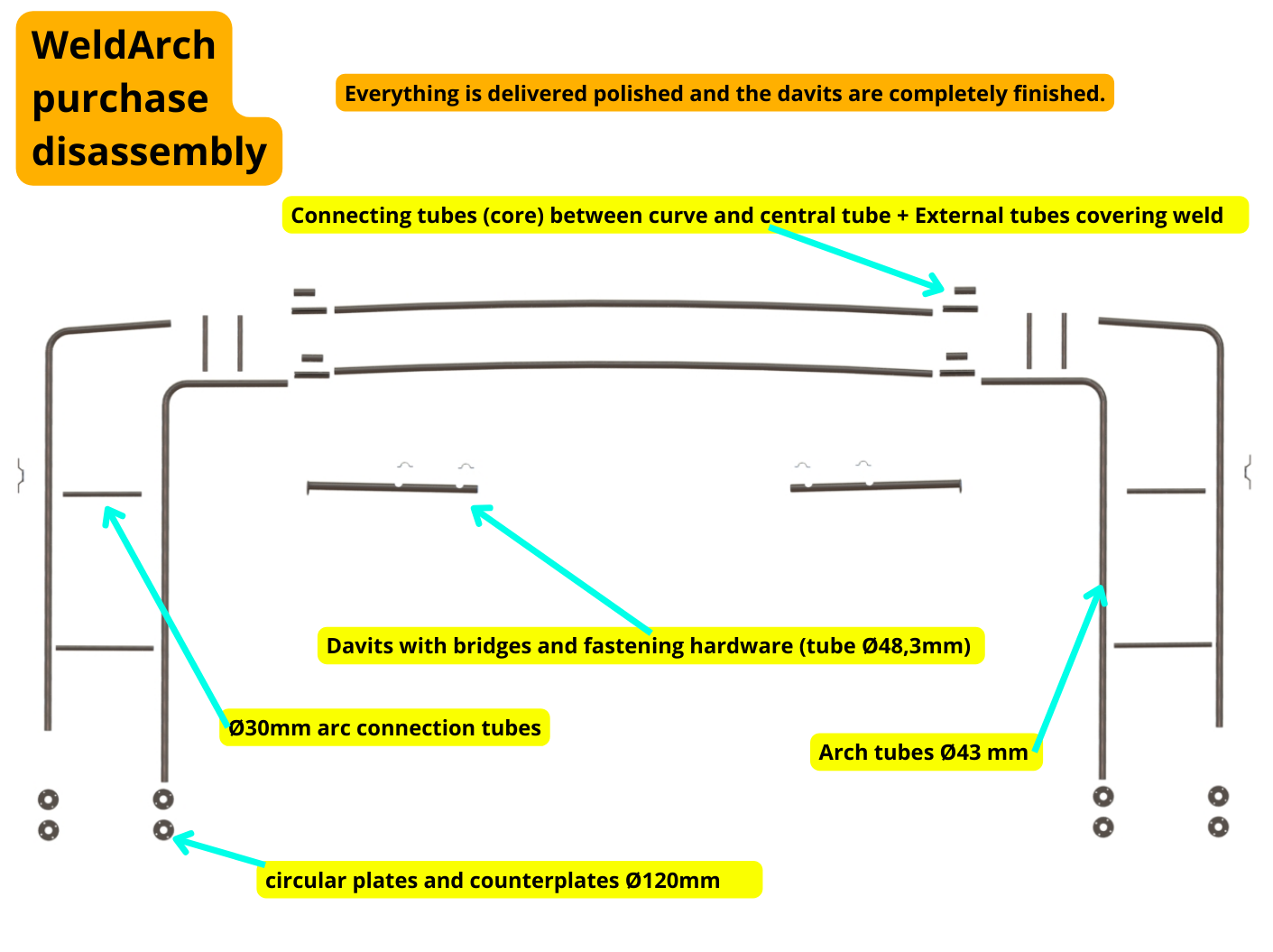
Each of the WeldArch’s side structures consists of two curved sections (made from Ø43mm tubing); one is fixed to the transom and the other to the deck using Ø120mm plates, which have holes through which the electrical cables from the solar panels and other electrical accessories pass. The two curves are joined together by three sections of Ø30mm tubing.
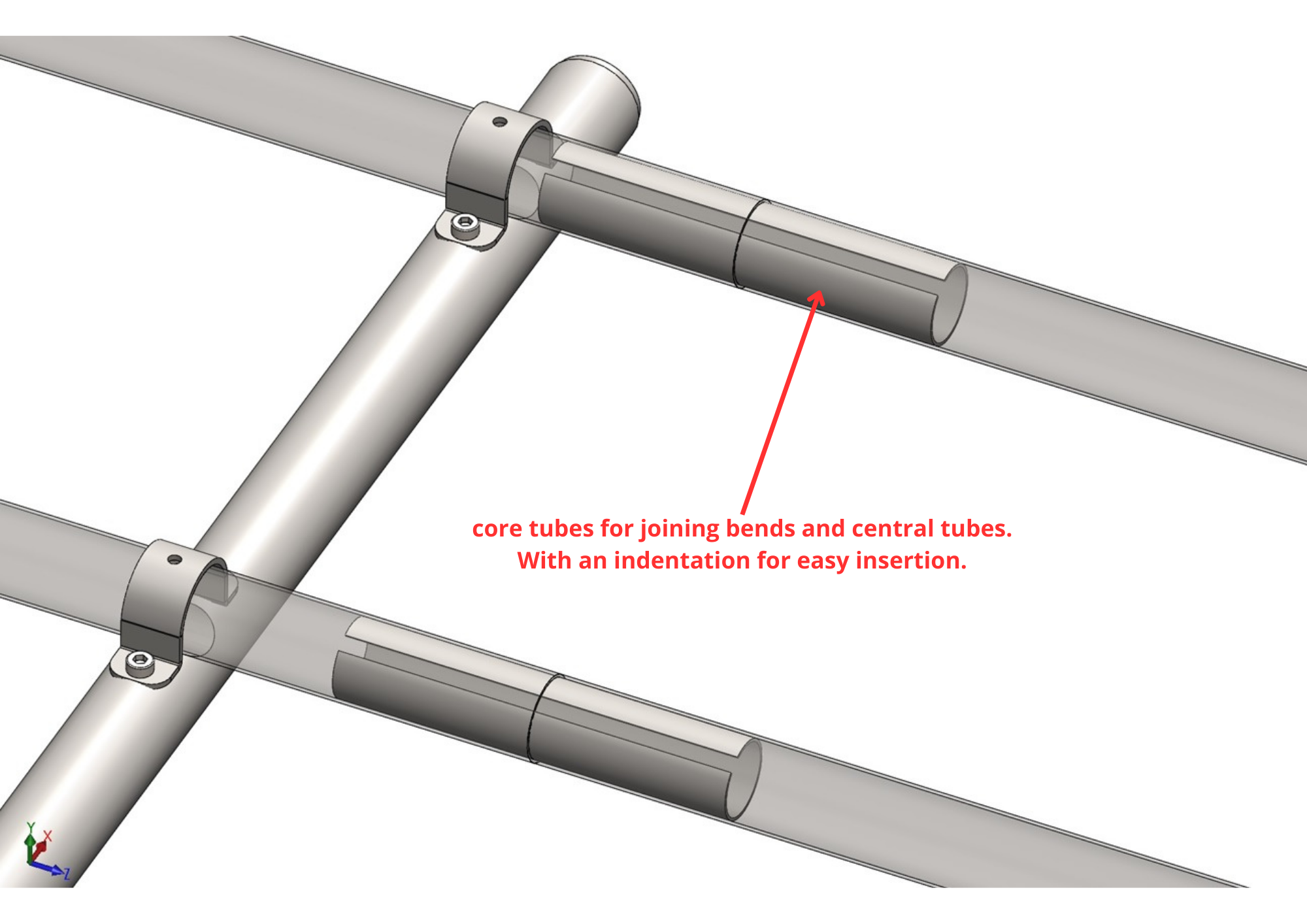
In turn, the two side structures are joined by two central tubes, also Ø43mm. For the connection between the central tubes and the side structures, Ø40mm core tubes and cover tubes are used to conceal the weld joint.
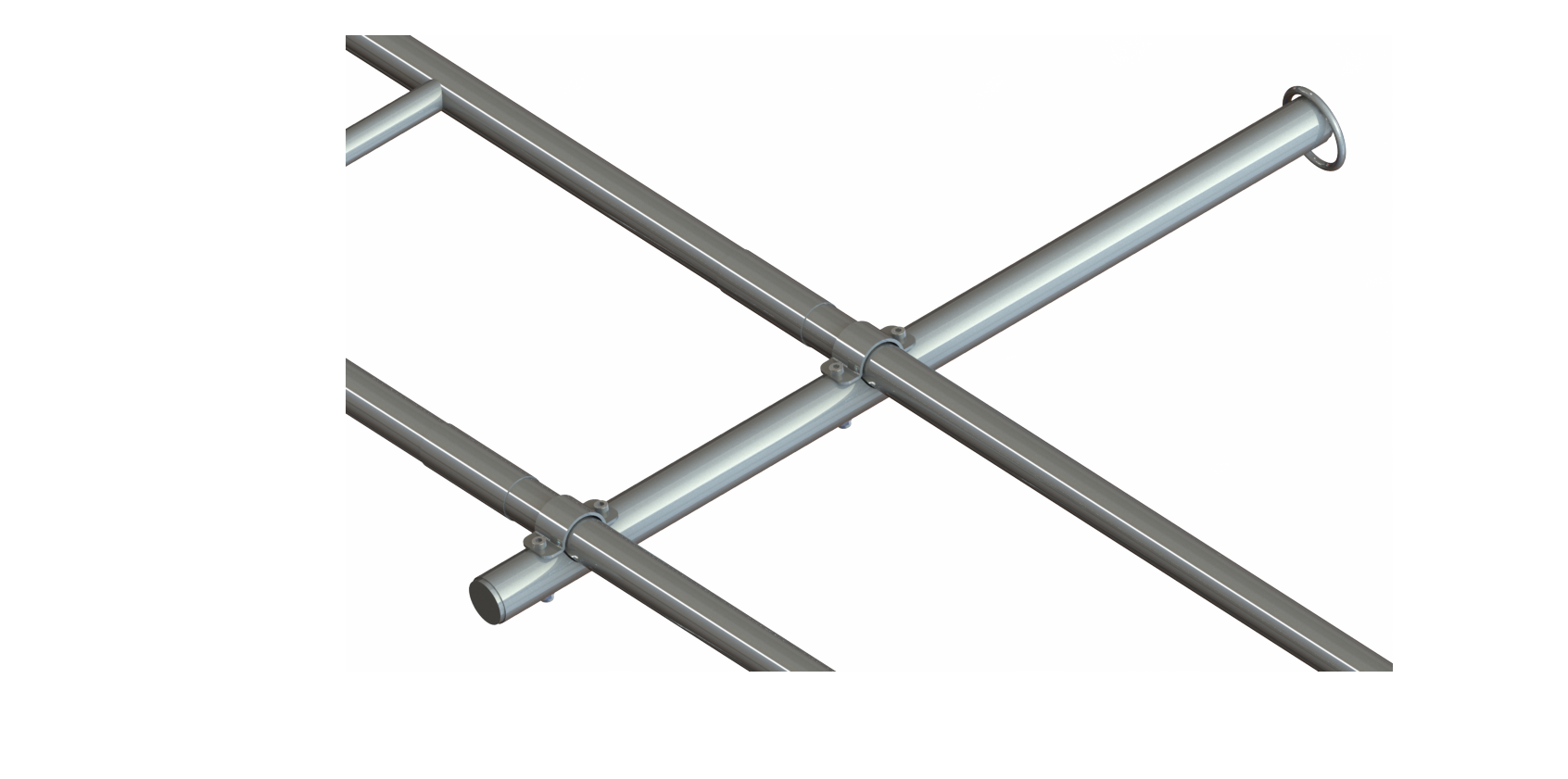
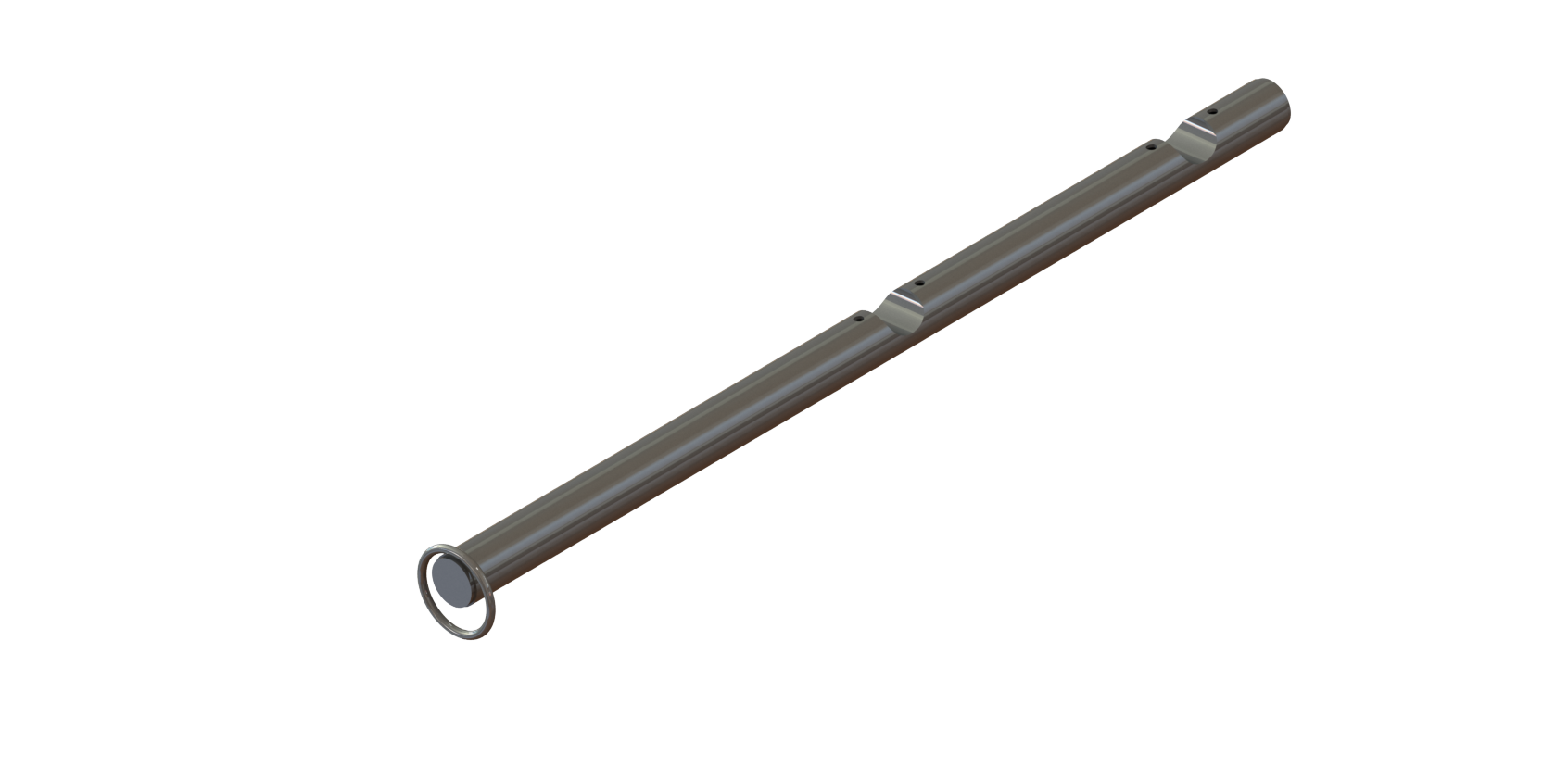
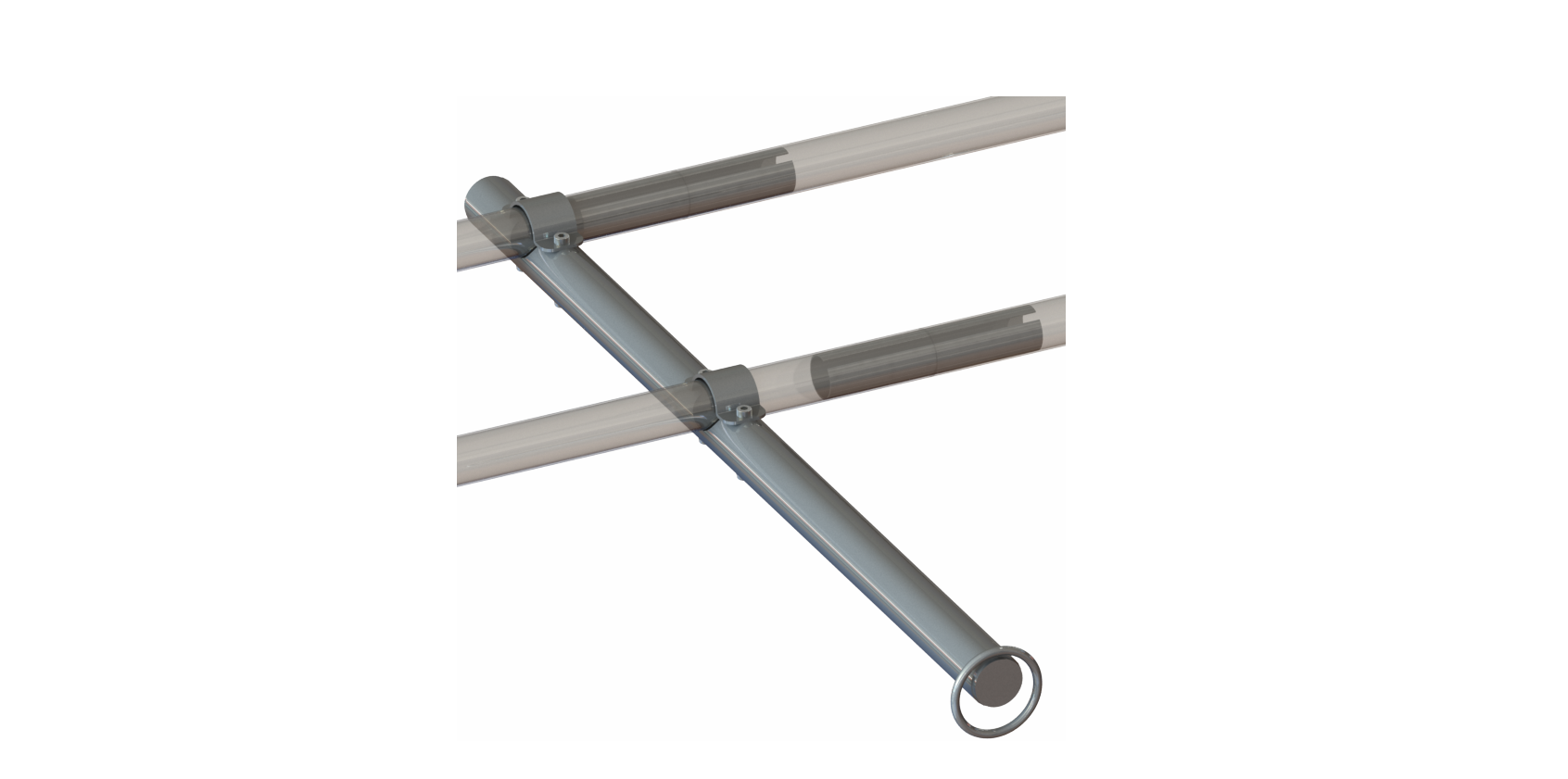
A pair of davits made from Ø48.3mm tubing and internally reinforced with Ø43mm tubing are supplied; these extend 500mm from the aft-most arch. The davits have slots that allow them to be attached to the central tubes using screw-fastened bridges.
The WeldArch has a high load-bearing capacity, which varies depending on the span of the arch.
For a span of up to 3 metres, the davits can support a dinghy weighing up to 200 kg.
The greater the beam, the lower the load capacity. At the WeldArch’s maximum standard beam (4.5 metres), the load capacity of the davits would be approximately 100kg.
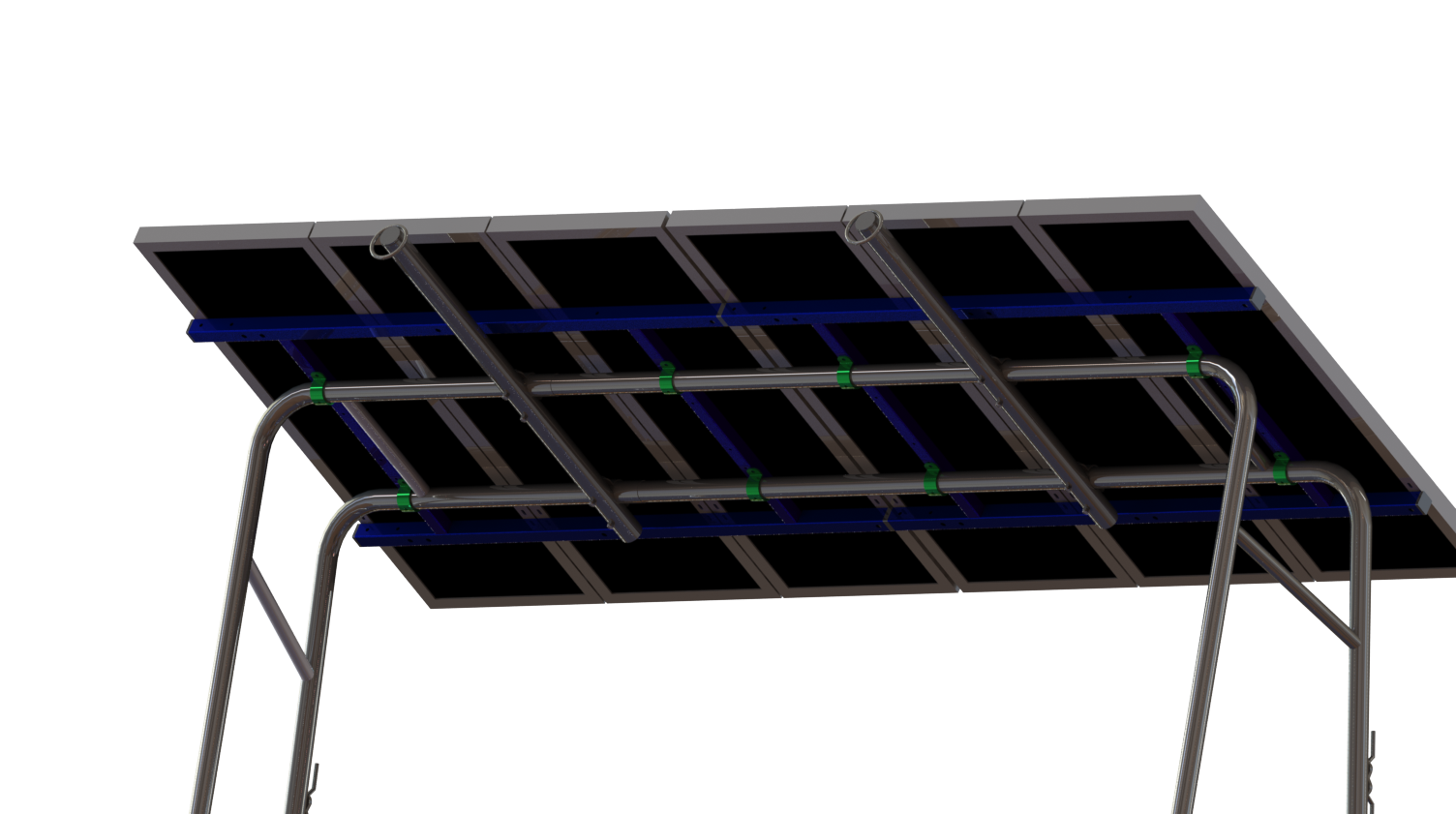
To ensure that a WeldArch with the maximum standard span (4.5 m) can support a 200 kg dinghy, it is recommended that a tubular structure be constructed to support the solar panels. This structure will be secured using cross-braces at the curve exit points of the side tubes, which significantly increases the arch’s rigidity. The image below shows the square tubular structure (in blue) secured by the cross-braces (in green).
The WeldArch is a solar arch made entirely from AISI-316 stainless steel, suitable for sailing boats with a transom beam of up to 4.5 metres (please enquire if the measurement is greater).
Each of the WeldArch’s side structures consists of two curved sections (made from Ø43mm tubing); one is fixed to the transom and the other to the deck using Ø120mm plates, which have holes through which the electrical cables from the solar panels and other electrical accessories pass. The two curves are joined together by three sections of Ø30mm tubing.
In turn, the two side structures are joined by two central tubes, also Ø43mm. For the connection between the central tubes and the side structures, Ø40mm core tubes and cover tubes are used to conceal the weld joint.
A pair of davits made from Ø48.3mm tubing and internally reinforced with Ø43mm tubing are supplied; these extend 500mm from the aft-most arch. The davits have slots that allow them to be attached to the central tubes using screw-fastened bridges.
The WeldArch has a high load-bearing capacity, which varies depending on the span of the arch.
For a span of up to 3 metres, the davits can support a dinghy weighing up to 200 kg.
The greater the beam, the lower the load capacity. At the WeldArch’s maximum standard beam (4.5 metres), the load capacity of the davits would be approximately 100kg.
To ensure that a WeldArch with the maximum standard span (4.5 m) can support a 200 kg dinghy, it is recommended that a tubular structure be constructed to support the solar panels. This structure will be secured using cross-braces at the curve exit points of the side tubes, which significantly increases the arch’s rigidity. The image below shows the square tubular structure (in blue) secured by the cross-braces (in green).